
The 2026 American Association for Cancer Research (AACR) Annual Meeting took place from April 17 to 22 at the San Diego Convention Center in California. As the premier multidisciplinary event in the oncology landscape, AACR serves as a global hub for cutting-edge research, driving innovation across academia and industry through groundbreaking academic discoveries and early-stage developmental progress.
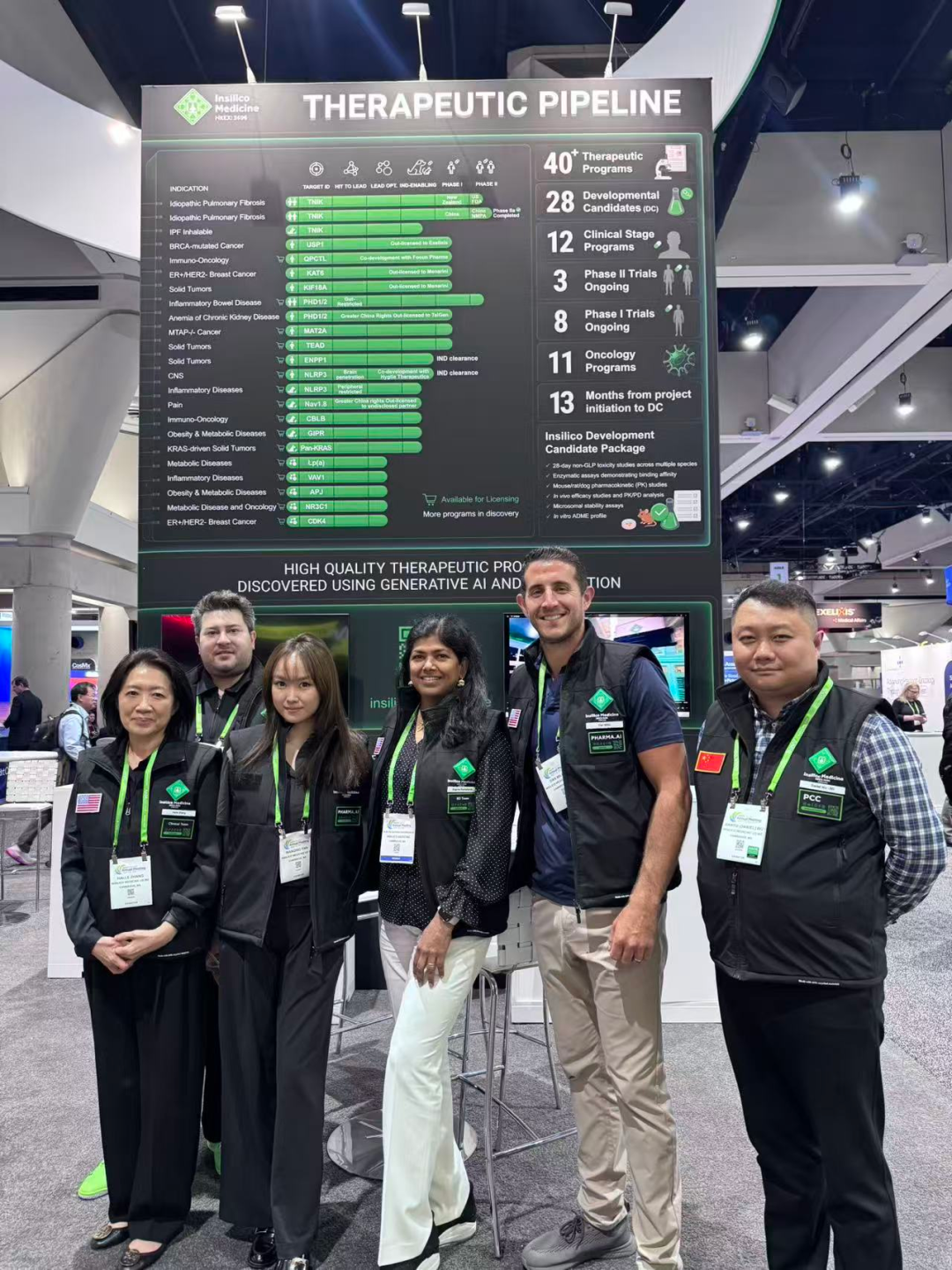
Leveraging the power of generative AI, Insilico Medicine has maintained a strong presence at AACR for four consecutive years. This year, the company’s preclinical data for four proprietary oncology pipelines were selected for poster presentations. Notably, two of these innovative programs originated from Insilico Medicine’s UAE-based R&D Center. We are pleased to share these four preclinical milestones with our partners across the global industrial and academic communities.

ISM6166, a novel oral pan-KRAS (ON/OFF) inhibitor shows robust anti-tumor activity in solid tumors with KRAS alterations
Q1: What results/findings were presented from the project at AACR 2026?
We presented an oral pan-KRAS (ON/OFF) inhibitor ISM6166 at AACR 2026, demonstrating high binding affinity and potent inhibitory activity against both the active and inactive forms of multiple mutants and WT KRAS proteins. In addition, results from cell panel and in vivo models showed that ISM6166 has anti-tumor activity against different cancer types bearing all major KRAS alterations.
The poster also showed that ISM6166 has favorable ADME and PK properties, along with promising in vitro safety profiles. Overall, ISM6166 has the potential to be a best-in-class pan-KRAS inhibitor.
Q2: What kind of target is this?
KRAS was considered an “undruggable” target for decades until the discovery of covalent, KRAS G12C–selective inhibitors. KRAS mutations and amplifications can drive excessive activation of downstream signaling pathways, leading to uncontrolled cell proliferation.
As one of the most prevalent oncogenic drivers, KRAS alterations occur in approximately 17% of all solid tumors, including pancreatic, colorectal, lung adenocarcinoma, and esophagogastric cancers.
Q3: What is the preclinical progress of this study?
Despite recent advances, KRAS G12C–selective inhibitors face clinical challenges in achieving durable therapeutic efficacy due to acquired drug resistance, while the mutational diversity of KRAS-driven cancers restricts their utility across patient populations, representing a significant unmet medical need. Our study presents a pan-KRAS inhibitor that targets multiple KRAS alterations, with the potential to overcome resistance driven by secondary mutations and to provide clinical benefit to a broader patient population. Furthermore, dual-state KRAS ON/OFF inhibition of ISM6166 may enable greater efficacy than the OFF-state inhibitor and have the potential to overcome acquired resistance.
Q4: What advantages does Insilico Medicine have in this project?
ISM6166 is an orally bioavailable, pan-KRAS ON/OFF dual-state inhibitor that spares HRAS and NRAS and demonstrates robust efficacy along with a favorable PK profile. The compound was designed with well-balanced properties, showing improved clearance and oral bioavailability, together with superior in vivo efficacy. On the other hand, the selectivity of ISM6166 for KRAS over HRAS and NRAS, given their essential role in normal tissues, may confer a wider therapeutic window in patients.
Cbl-b inhibition with ISM3830, a novel AI-generated small molecule, restores innate and adaptive immunity and demonstrates antitumor activity against solid tumors in vitro and in vivo
Q1: What results/findings were presented from the project at AACR 2026?
At AACR 2026, we presented the preclinical development and characterization of ISM3830, a novel Cbl-b inhibitor. Our data showed that ISM3830 potently restored both innate and adaptive immune responses, leading to enhanced activation of primary human T cells and NK cells. In a series of in vitro and in vivo studies, ISM3830 increased IL-2 and IFN-γ release, and restored T cell function under immunosuppressive conditions. In mouse tumor models, ISM3830 significantly inhibited tumor growth as a single agent and achieved complete tumor regression in combination with anti-PD-1. ISM3830 also demonstrated strong efficacy in tumor rechallenge models, indicating long-term immune memory. Additionally, comprehensive metabolic and safety profiling revealed low risk of drug-drug interactions, high oral bioavailability, and a favorable safety profile across multiple species. These findings support the further development of ISM3830 as an effective and safe immune checkpoint inhibitor for solid tumors.
Q2: What kind of target is this?
Cbl-b is an intracellular immune checkpoint downstream of both CD28 and CTLA-4 signaling that negatively regulates activation of T cells, NK cells, dendritic cells, and mast cells, representing a promising, distinct target for cancer immunotherapy.
Q3: What is the preclinical progress of this study?
This study addresses the urgent need for novel therapeutic strategies in patients who do not adequately respond to existing immune checkpoint inhibitors. By targeting Cbl-b, an intracellular immune checkpoint molecule downstream of both CD28 and CTLA-4 signaling, ISM3830 offers a new approach to enhance both innate and adaptive immunity. Preclinical findings demonstrate that ISM3830 not only activates T cells and NK cells, but also restores immune function within the immunosuppressive tumor microenvironment, resulting in robust antitumor efficacy across multiple solid tumor models. Importantly, ISM3830 shows a favorable safety and pharmacokinetic profile, as well as low potential for drug-drug interactions, supporting its potential clinical utility.
The development of ISM3830 provides a promising therapeutic option for cancer patients, particularly those who are resistant or non-responsive to current checkpoint inhibitors. By further enriching the immune checkpoint inhibitor pipeline, this study may help expand the benefit of immunotherapy to a broader patient population and address unmet clinical needs in the treatment of solid tumors.
Q4: What advantages does Insilico Medicine have in this project?
Our CBLB inhibitor was developed based on structure-guided drug design and advanced AI-powered platforms. By leveraging our proprietary molecular generation platform, Chemistry42, we efficiently designed and screened a diverse pool of small-molecule candidates, rapidly identifying highly promising lead compounds. The compound exhibits a well-balanced profile including good in vitro activity, outstanding pharmacokinetic (PK) properties with low in vivo clearance and high oral bioavailability across preclinical species, robust antitumor efficacy in multiple in vivo tumor models by effectively activating innate and adaptive immunity. With these advantages, Insilico Medicine’s CBLB inhibitor has strong potential to offer clinical benefit to patients, particularly those who do not respond to current checkpoint inhibitor therapies.
ISM6210, a potent and selective AI-discovered CDK4 inhibitor for the treatment of HR+/HER2- breast cancer
Q1: What results/findings were presented from the project at AACR 2026?
At AACR 2026, we presented key results for our CDK4-selective inhibitor ISM6210. Preclinical data demonstrated that ISM6210 is a potent and highly selective CDK4 inhibitor with strong anti-tumor efficacy in HR+/HER2– breast cancer models. In a series of in vitro enzymatic and cellular assays, ISM6210 showed nanomolar inhibitory activity against CDK4, excellent selectivity over CDK6 and other CDKs, and robust inhibition of breast cancer cell growth. Importantly, compared to dual CDK4/6 inhibitors, ISM6210 exhibited significantly reduced toxicity toward human hematopoietic stem cells, indicating a promising hematologic safety margin.
In in vivo studies, ISM6210 displayed strong anti-tumor activity at well-tolerated doses across multiple HR+ breast cancer xenograft models, with clear evidence of tumor regression. Additionally, ISM6210 exhibited favorable drug-like properties, including excellent in vitro ADMET profiles, high oral exposure and bioavailability, and favorable pharmacokinetics in multiple preclinical species.
Collectively, these results establish ISM6210 as a highly effective and safe CDK4 inhibitor with significant potential for the treatment of patients with HR+/HER2– breast cancer.
Q2: What kind of target is this?
CDK4/6 kinases drive the G1-S cell cycle transition, and overactive cyclin–CDK4/6 complexes are common across cancer types. While clinically approved CDK4/6 inhibitors have benefited patients with HR+/HER2- breast cancer, their efficacy is constrained by dose-limiting hematological toxicities, particularly CDK6-driven myelosuppression. Hematopoietic stem cell activation relies primarily on CDK6, but breast cancer cells are more dependent on CDK4, suggesting a potential therapeutic window for a CDK4-selective inhibitor.
Q3: What is the preclinical progress of this study?
This study provides a novel and selective CDK4 inhibitor, ISM6210, which offers significant clinical advantages for patients with HR+/HER2– breast cancer. Compared to dual CDK4/6 inhibitors, a selective CDK4 inhibitor can minimize hematological toxicities such as neutropenia, allow higher doses for more effective CDK4 inhibition, and increase the therapeutic index. These features suggest that ISM6210 could deliver improved efficacy with a better safety profile, thus addressing important unmet needs in breast cancer treatment.
Q4: What advantages does Insilico Medicine have in this project?
Insilico Medicine utilizes advanced AI-driven platforms, such as Chemistry42, for structure-based drug design, enabling rapid identification of optimal lead compounds. Our CDK4 inhibitor shows strong enzymatic and cellular activity, favorable ADME and pharmacokinetic properties, and robust anti-tumor efficacy in preclinical models. Notably, it achieves good oral exposure and bioavailability, with a promising safety margin. These advantages position our molecule as an effective and safe candidate for clinical development in HR+/HER2– breast cancer.
ISM1745, an MTA-cooperative PRMT5 inhibitor for the treatment of MTAP-deleted cancer
Q1: What results/findings were presented from the project at AACR 2026?
At AACR 2026, we presented the discovery and preclinical characterization of ISM1745, a novel, orally bioavailable MTA-cooperative PRMT5 inhibitor targeting MTAP-deleted cancers. Our compound showed strong inhibitory activity against PRMT5, with 272-fold selectivity for MTAP-deficient cells compared to MTAP wild-type cells in vitro. ISM1745 induced apoptosis, cell cycle arrest, and DNA damage specifically in MTAP-deleted cells, demonstrating potent anti-tumor effects in cell assays.
In in vivo studies, ISM1745 achieved marked and sustained tumor growth inhibition in MTAP-deleted xenograft models with good oral exposure, low clearance, and moderate to high oral bioavailability across multiple species. Combination therapy with an MAT2A inhibitor further enhanced anti-tumor activity, indicating strong synergistic potential. Additionally, ISM1745 exhibited minimal off-target effects and a favorable safety profile.
Taken together, these results establish ISM1745 as a potent and selective MTA-cooperative PRMT5 inhibitor with robust antitumor efficacy and promising clinical potential for MTAP-deleted cancers.
Q2: What kind of target is this?
MTAP deficiency is observed in approximately 15% of human cancers and leads to accumulation of methylthioadenosine (MTA), which competes with the methyl-donor S-adenosylmethionine (SAM) to partially inhibit post-translational methyltransferase activity of PRMT5. This molecular context creates a vulnerability in MTAP-deleted tumors, rendering them particularly susceptible to PRMT5 inhibition. MTA-cooperative PRMT5 inhibitors preferentially bind to PRMT5 when MTA occupies the SAM-binding pocket of PRMT5, thus increasing inhibitory specificity to MTAP-deficient cells.
Q3: What is the preclinical progress of this study?
This study provides a targeted therapeutic approach for MTAP-deleted cancers, which constitute a significant proportion of human malignancies. ISM1745, an MTA-cooperative PRMT5 inhibitor, demonstrates high specificity and potent antitumor activity in MTAP-deficient tumor models, while minimizing off-target effects and maintaining a favorable safety profile. The compound’s ability to selectively induce apoptosis and DNA damage in MTAP-deleted cells highlights its potential to deliver substantial clinical benefits for patients who currently lack effective treatment options. Moreover, its promising oral bioavailability and synergistic effects in combinatorial therapies further support its development as a novel precision medicine for MTAP-deleted cancers.
Q4: What advantages does Insilico Medicine have in this project?
Insilico Medicine leverages advanced AI-driven drug discovery platforms, such as Chemistry42, to efficiently design and optimize novel small molecules. Our compound demonstrates strong in vitro cellular activity, excellent ADME and pharmacokinetic properties, and robust antitumor efficacy in preclinical models. Notably, ISM1745 exhibits high oral exposure and bioavailability, ensuring effective systemic delivery. These combined advantages position our molecule as a highly promising and safe candidate for clinical development to treat patients with MTAP-deleted cancers.
Q1: What results/findings were presented from the project at AACR 2026?
We presented an oral pan-KRAS (ON/OFF) inhibitor ISM6166 at AACR 2026, demonstrating high binding affinity and potent inhibitory activity against both the active and inactive forms of multiple mutants and WT KRAS proteins. In addition, results from cell panel and in vivo models showed that ISM6166 has anti-tumor activity against different cancer types bearing all major KRAS alterations.
The poster also showed that ISM6166 has favorable ADME and PK properties, along with promising in vitro safety profiles. Overall, ISM6166 has the potential to be a best-in-class pan-KRAS inhibitor.
Q2: What kind of target is this?
KRAS was considered an “undruggable” target for decades until the discovery of covalent, KRAS G12C–selective inhibitors. KRAS mutations and amplifications can drive excessive activation of downstream signaling pathways, leading to uncontrolled cell proliferation.
As one of the most prevalent oncogenic drivers, KRAS alterations occur in approximately 17% of all solid tumors, including pancreatic, colorectal, lung adenocarcinoma, and esophagogastric cancers.
Q3: What is the preclinical progress of this study?
Despite recent advances, KRAS G12C–selective inhibitors face clinical challenges in achieving durable therapeutic efficacy due to acquired drug resistance, while the mutational diversity of KRAS-driven cancers restricts their utility across patient populations, representing a significant unmet medical need. Our study presents a pan-KRAS inhibitor that targets multiple KRAS alterations, with the potential to overcome resistance driven by secondary mutations and to provide clinical benefit to a broader patient population. Furthermore, dual-state KRAS ON/OFF inhibition of ISM6166 may enable greater efficacy than the OFF-state inhibitor and have the potential to overcome acquired resistance.
Q4: What advantages does Insilico Medicine have in this project?
ISM6166 is an orally bioavailable, pan-KRAS ON/OFF dual-state inhibitor that spares HRAS and NRAS and demonstrates robust efficacy along with a favorable PK profile. The compound was designed with well-balanced properties, showing improved clearance and oral bioavailability, together with superior in vivo efficacy. On the other hand, the selectivity of ISM6166 for KRAS over HRAS and NRAS, given their essential role in normal tissues, may confer a wider therapeutic window in patients.
Cbl-b inhibition with ISM3830, a novel AI-generated small molecule, restores innate and adaptive immunity and demonstrates antitumor activity against solid tumors in vitro and in vivo
Q1: What results/findings were presented from the project at AACR 2026?
At AACR 2026, we presented the preclinical development and characterization of ISM3830, a novel Cbl-b inhibitor. Our data showed that ISM3830 potently restored both innate and adaptive immune responses, leading to enhanced activation of primary human T cells and NK cells. In a series of in vitro and in vivo studies, ISM3830 increased IL-2 and IFN-γ release, and restored T cell function under immunosuppressive conditions. In mouse tumor models, ISM3830 significantly inhibited tumor growth as a single agent and achieved complete tumor regression in combination with anti-PD-1. ISM3830 also demonstrated strong efficacy in tumor rechallenge models, indicating long-term immune memory. Additionally, comprehensive metabolic and safety profiling revealed low risk of drug-drug interactions, high oral bioavailability, and a favorable safety profile across multiple species. These findings support the further development of ISM3830 as an effective and safe immune checkpoint inhibitor for solid tumors.
Q2: What kind of target is this?
Cbl-b is an intracellular immune checkpoint downstream of both CD28 and CTLA-4 signaling that negatively regulates activation of T cells, NK cells, dendritic cells, and mast cells, representing a promising, distinct target for cancer immunotherapy.
Q3: What is the preclinical progress of this study?
This study addresses the urgent need for novel therapeutic strategies in patients who do not adequately respond to existing immune checkpoint inhibitors. By targeting Cbl-b, an intracellular immune checkpoint molecule downstream of both CD28 and CTLA-4 signaling, ISM3830 offers a new approach to enhance both innate and adaptive immunity. Preclinical findings demonstrate that ISM3830 not only activates T cells and NK cells, but also restores immune function within the immunosuppressive tumor microenvironment, resulting in robust antitumor efficacy across multiple solid tumor models. Importantly, ISM3830 shows a favorable safety and pharmacokinetic profile, as well as low potential for drug-drug interactions, supporting its potential clinical utility.
The development of ISM3830 provides a promising therapeutic option for cancer patients, particularly those who are resistant or non-responsive to current checkpoint inhibitors. By further enriching the immune checkpoint inhibitor pipeline, this study may help expand the benefit of immunotherapy to a broader patient population and address unmet clinical needs in the treatment of solid tumors.
Q4: What advantages does Insilico Medicine have in this project?
Our CBLB inhibitor was developed based on structure-guided drug design and advanced AI-powered platforms. By leveraging our proprietary molecular generation platform, Chemistry42, we efficiently designed and screened a diverse pool of small-molecule candidates, rapidly identifying highly promising lead compounds. The compound exhibits a well-balanced profile including good in vitro activity, outstanding pharmacokinetic (PK) properties with low in vivo clearance and high oral bioavailability across preclinical species, robust antitumor efficacy in multiple in vivo tumor models by effectively activating innate and adaptive immunity. With these advantages, Insilico Medicine’s CBLB inhibitor has strong potential to offer clinical benefit to patients, particularly those who do not respond to current checkpoint inhibitor therapies.
ISM6210, a potent and selective AI-discovered CDK4 inhibitor for the treatment of HR+/HER2- breast cancer
Q1: What results/findings were presented from the project at AACR 2026?
At AACR 2026, we presented key results for our CDK4-selective inhibitor ISM6210. Preclinical data demonstrated that ISM6210 is a potent and highly selective CDK4 inhibitor with strong anti-tumor efficacy in HR+/HER2– breast cancer models. In a series of in vitro enzymatic and cellular assays, ISM6210 showed nanomolar inhibitory activity against CDK4, excellent selectivity over CDK6 and other CDKs, and robust inhibition of breast cancer cell growth. Importantly, compared to dual CDK4/6 inhibitors, ISM6210 exhibited significantly reduced toxicity toward human hematopoietic stem cells, indicating a promising hematologic safety margin.
In in vivo studies, ISM6210 displayed strong anti-tumor activity at well-tolerated doses across multiple HR+ breast cancer xenograft models, with clear evidence of tumor regression. Additionally, ISM6210 exhibited favorable drug-like properties, including excellent in vitro ADMET profiles, high oral exposure and bioavailability, and favorable pharmacokinetics in multiple preclinical species.
Collectively, these results establish ISM6210 as a highly effective and safe CDK4 inhibitor with significant potential for the treatment of patients with HR+/HER2– breast cancer.
Q2: What kind of target is this?
CDK4/6 kinases drive the G1-S cell cycle transition, and overactive cyclin–CDK4/6 complexes are common across cancer types. While clinically approved CDK4/6 inhibitors have benefited patients with HR+/HER2- breast cancer, their efficacy is constrained by dose-limiting hematological toxicities, particularly CDK6-driven myelosuppression. Hematopoietic stem cell activation relies primarily on CDK6, but breast cancer cells are more dependent on CDK4, suggesting a potential therapeutic window for a CDK4-selective inhibitor.
Q3: What is the preclinical progress of this study?
This study provides a novel and selective CDK4 inhibitor, ISM6210, which offers significant clinical advantages for patients with HR+/HER2– breast cancer. Compared to dual CDK4/6 inhibitors, a selective CDK4 inhibitor can minimize hematological toxicities such as neutropenia, allow higher doses for more effective CDK4 inhibition, and increase the therapeutic index. These features suggest that ISM6210 could deliver improved efficacy with a better safety profile, thus addressing important unmet needs in breast cancer treatment.
Q4: What advantages does Insilico Medicine have in this project?
Insilico Medicine utilizes advanced AI-driven platforms, such as Chemistry42, for structure-based drug design, enabling rapid identification of optimal lead compounds. Our CDK4 inhibitor shows strong enzymatic and cellular activity, favorable ADME and pharmacokinetic properties, and robust anti-tumor efficacy in preclinical models. Notably, it achieves good oral exposure and bioavailability, with a promising safety margin. These advantages position our molecule as an effective and safe candidate for clinical development in HR+/HER2– breast cancer.
ISM1745, an MTA-cooperative PRMT5 inhibitor for the treatment of MTAP-deleted cancer
Q1: What results/findings were presented from the project at AACR 2026?
At AACR 2026, we presented the discovery and preclinical characterization of ISM1745, a novel, orally bioavailable MTA-cooperative PRMT5 inhibitor targeting MTAP-deleted cancers. Our compound showed strong inhibitory activity against PRMT5, with 272-fold selectivity for MTAP-deficient cells compared to MTAP wild-type cells in vitro. ISM1745 induced apoptosis, cell cycle arrest, and DNA damage specifically in MTAP-deleted cells, demonstrating potent anti-tumor effects in cell assays.
In in vivo studies, ISM1745 achieved marked and sustained tumor growth inhibition in MTAP-deleted xenograft models with good oral exposure, low clearance, and moderate to high oral bioavailability across multiple species. Combination therapy with an MAT2A inhibitor further enhanced anti-tumor activity, indicating strong synergistic potential. Additionally, ISM1745 exhibited minimal off-target effects and a favorable safety profile.
Taken together, these results establish ISM1745 as a potent and selective MTA-cooperative PRMT5 inhibitor with robust antitumor efficacy and promising clinical potential for MTAP-deleted cancers.
Q2: What kind of target is this?
MTAP deficiency is observed in approximately 15% of human cancers and leads to accumulation of methylthioadenosine (MTA), which competes with the methyl-donor S-adenosylmethionine (SAM) to partially inhibit post-translational methyltransferase activity of PRMT5. This molecular context creates a vulnerability in MTAP-deleted tumors, rendering them particularly susceptible to PRMT5 inhibition. MTA-cooperative PRMT5 inhibitors preferentially bind to PRMT5 when MTA occupies the SAM-binding pocket of PRMT5, thus increasing inhibitory specificity to MTAP-deficient cells.
Q3: What is the preclinical progress of this study?
This study provides a targeted therapeutic approach for MTAP-deleted cancers, which constitute a significant proportion of human malignancies. ISM1745, an MTA-cooperative PRMT5 inhibitor, demonstrates high specificity and potent antitumor activity in MTAP-deficient tumor models, while minimizing off-target effects and maintaining a favorable safety profile. The compound’s ability to selectively induce apoptosis and DNA damage in MTAP-deleted cells highlights its potential to deliver substantial clinical benefits for patients who currently lack effective treatment options. Moreover, its promising oral bioavailability and synergistic effects in combinatorial therapies further support its development as a novel precision medicine for MTAP-deleted cancers.
Q4: What advantages does Insilico Medicine have in this project?
Insilico Medicine leverages advanced AI-driven drug discovery platforms, such as Chemistry42, to efficiently design and optimize novel small molecules. Our compound demonstrates strong in vitro cellular activity, excellent ADME and pharmacokinetic properties, and robust antitumor efficacy in preclinical models. Notably, ISM1745 exhibits high oral exposure and bioavailability, ensuring effective systemic delivery. These combined advantages position our molecule as a highly promising and safe candidate for clinical development to treat patients with MTAP-deleted cancers.