A joint study by Insilico Medicine, the University of Copenhagen, and academic partners identifies NDRG1 as a key regulator of DNA damage repair, demonstrating that targeting this pathway via the antimalarial drug quinacrine triggers synthetic lethality in specific cancer subtypes.
Insilico Medicine (HKEX:3696, "Insilico"), a clinical-stage biotechnology company pioneering generative artificial intelligence (AI) for drug discovery and development, announced publication of a new study in Science Signaling. The paper details how computational biology and experimental research converged to uncover a novel target in cancer DNA damage repair centered on the stress-response protein NDRG1.
Led by researchers at the University of Copenhagen in collaboration with Insilico Medicine and international partners, the multidisciplinary study combined computational transcriptomic analyses, high-content genetic screening, molecular biology, and large-scale cancer cell profiling. The team demonstrated that pharmacological or genetic disruption of the NDRG1–VCP interaction impairs the recruitment of key DNA repair proteins, triggering synthetic lethality in specific cancer subtypes—most notably colorectal cancers harboring MLH1 or PARP3 mutations.
“DNA damage repair is essential to cell survival, making it an attractive target for cancer therapy. Mkrtchyan et al. identified a therapeutically exploitable role for the stress-response protein NDRG1 in the DNA damage response (DDR). High-throughput screens revealed that high NDRG1 expression in cancer cell lines correlated with sensitivity to the antimalarial drug quinacrine, which impaired the ubiquitylation-dependent recruitment of a critical DDR protein to sites of DNA damage. Colorectal cancer cells with mutations in the DNA repair–associated genes MLH1 and PARP3 were particularly sensitive to quinacrine or NDRG1 knockdown. The findings reveal potential strategies to target the DDR based on NDRG1 expression. ” summarized by Leslie K. Ferrarelli, Senior Editor at Science Signaling
From Computational Hypothesis to Biological Discovery
Cancer cells frequently become dependent on the DNA repair pathways that remain functional after accumulating genetic alterations. Identifying these dependencies can reveal new therapeutic opportunities and help guide precision medicine approaches.
The study combined computational transcriptomic analyses with high-content genetic screening, molecular biology, and large-scale cancer cell profiling to identify and validate NDRG1 as a key regulator of DNA damage repair. Computational analyses first identified quinacrine as a candidate modulator of DNA damage response pathways. Subsequent laboratory studies established the underlying molecular mechanism, demonstrating that quinacrine disrupts the interaction between NDRG1 and VCP, resulting in degradation of proteins required for effective DNA damage repair.
Led by researchers at the University of Copenhagen in collaboration with Insilico Medicine and international partners, the multidisciplinary study combined computational transcriptomic analyses, high-content genetic screening, molecular biology, and large-scale cancer cell profiling. The team demonstrated that pharmacological or genetic disruption of the NDRG1–VCP interaction impairs the recruitment of key DNA repair proteins, triggering synthetic lethality in specific cancer subtypes—most notably colorectal cancers harboring MLH1 or PARP3 mutations.
“DNA damage repair is essential to cell survival, making it an attractive target for cancer therapy. Mkrtchyan et al. identified a therapeutically exploitable role for the stress-response protein NDRG1 in the DNA damage response (DDR). High-throughput screens revealed that high NDRG1 expression in cancer cell lines correlated with sensitivity to the antimalarial drug quinacrine, which impaired the ubiquitylation-dependent recruitment of a critical DDR protein to sites of DNA damage. Colorectal cancer cells with mutations in the DNA repair–associated genes MLH1 and PARP3 were particularly sensitive to quinacrine or NDRG1 knockdown. The findings reveal potential strategies to target the DDR based on NDRG1 expression. ” summarized by Leslie K. Ferrarelli, Senior Editor at Science Signaling
From Computational Hypothesis to Biological Discovery
Cancer cells frequently become dependent on the DNA repair pathways that remain functional after accumulating genetic alterations. Identifying these dependencies can reveal new therapeutic opportunities and help guide precision medicine approaches.
The study combined computational transcriptomic analyses with high-content genetic screening, molecular biology, and large-scale cancer cell profiling to identify and validate NDRG1 as a key regulator of DNA damage repair. Computational analyses first identified quinacrine as a candidate modulator of DNA damage response pathways. Subsequent laboratory studies established the underlying molecular mechanism, demonstrating that quinacrine disrupts the interaction between NDRG1 and VCP, resulting in degradation of proteins required for effective DNA damage repair.
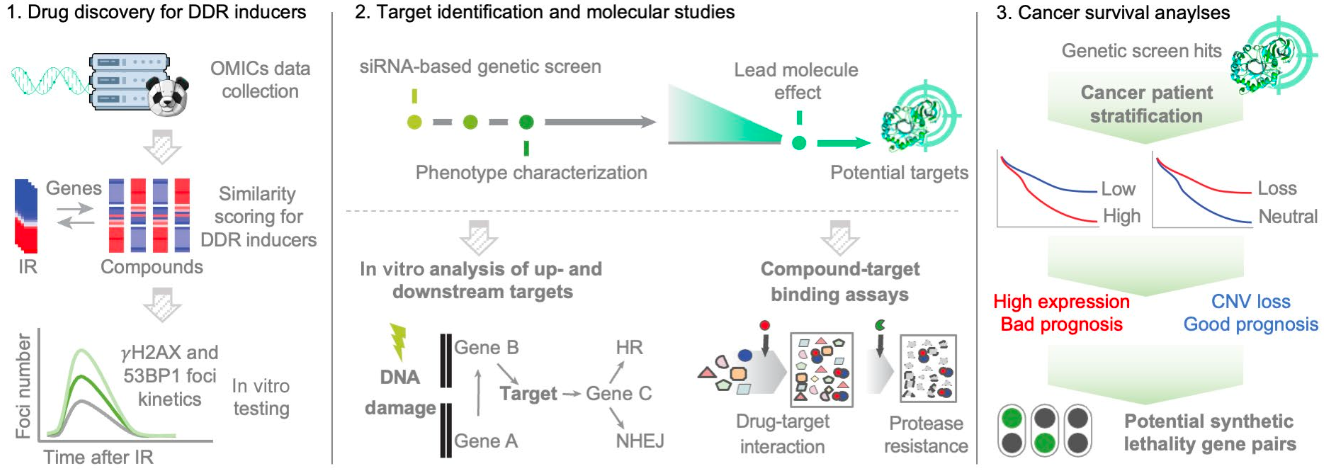
Figure 1. Experimental design: (1) identification of small molecules targeting DDR, (2) target identification, and (3) discovery of sensitive cancers.
"Artificial intelligence is becoming much more than an accelerator for drug discovery—it is increasingly helping scientists uncover new biology," said Alex Zhavoronkov, PhD, Founder and Chief Executive Officer of Insilico Medicine and co-author of the study. "By integrating large-scale biological datasets with advanced computational methods, we can generate hypotheses that would be extraordinarily difficult to identify through conventional approaches alone. This study demonstrates how computational and experimental science can work together to reveal new therapeutic opportunities while deepening our understanding of disease biology. Every transformative therapy begins with a biological insight. Studies like this show how AI can help scientists uncover those insights, enabling the next generation of precision medicines."
The project began with computational analyses comparing transcriptomic responses associated with DNA damage against large-scale perturbation datasets to identify candidate compounds capable of modulating DNA repair pathways. These analyses highlighted quinacrine as a promising candidate for further investigation. Subsequent experimental studies revealed that quinacrine disrupts the interaction between NDRG1 and VCP, promoting degradation of proteins required for effective DNA damage repair and impairing downstream repair signaling.
"Understanding why certain cancers become dependent on specific DNA repair pathways is essential for developing more precise therapeutic strategies," said Morten Scheibye-Knudsen, MD, PhD, Professor at the University of Copenhagen and senior author of the study. "By integrating computational prediction with rigorous laboratory validation, we identified NDRG1 as a clinically relevant biological vulnerability and established a framework for exploring future precision oncology approaches in genetically defined patient populations."
"Understanding why certain cancers become dependent on specific DNA repair pathways is essential for developing more precise therapeutic strategies," said Morten Scheibye-Knudsen, MD, PhD, Professor at the University of Copenhagen and senior author of the study. "By integrating computational prediction with rigorous laboratory validation, we identified NDRG1 as a clinically relevant biological vulnerability and established a framework for exploring future precision oncology approaches in genetically defined patient populations."
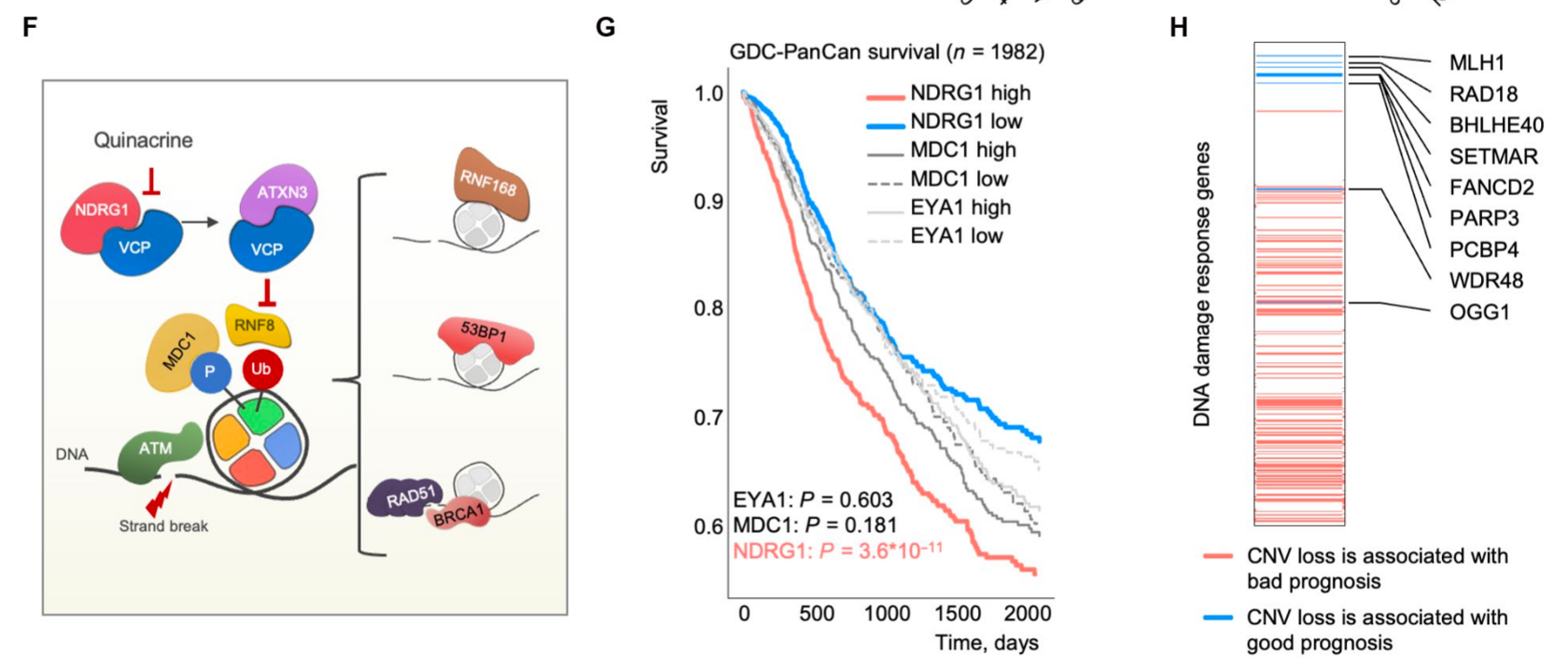
Figure 3. Mechanistic studies identified NDRG1 as a central regulator of DNA damage repair signaling and demonstrated its association with patient outcomes across multiple cancer types.
The study incorporated analyses of patient survival datasets, high-throughput screening across more than 130 cancer cell lines representing 28 cancer types, mechanistic molecular biology studies, and validation across multiple experimental systems. Together, these complementary approaches established NDRG1 as a previously unrecognized regulator of DNA damage repair and highlighted opportunities for future therapeutic development.
"Large-scale biological datasets contain relationships that are extraordinarily difficult to identify using conventional analytical approaches alone," said Alex Aliper, PhD, co-founder of Insilico Medicine and co-author of the study. "Computational biology enables researchers to systematically prioritize hypotheses for experimental validation, allowing computational and laboratory science to complement one another throughout the discovery process. This publication represents an example of that collaborative approach in action."
"Large-scale biological datasets contain relationships that are extraordinarily difficult to identify using conventional analytical approaches alone," said Alex Aliper, PhD, co-founder of Insilico Medicine and co-author of the study. "Computational biology enables researchers to systematically prioritize hypotheses for experimental validation, allowing computational and laboratory science to complement one another throughout the discovery process. This publication represents an example of that collaborative approach in action."
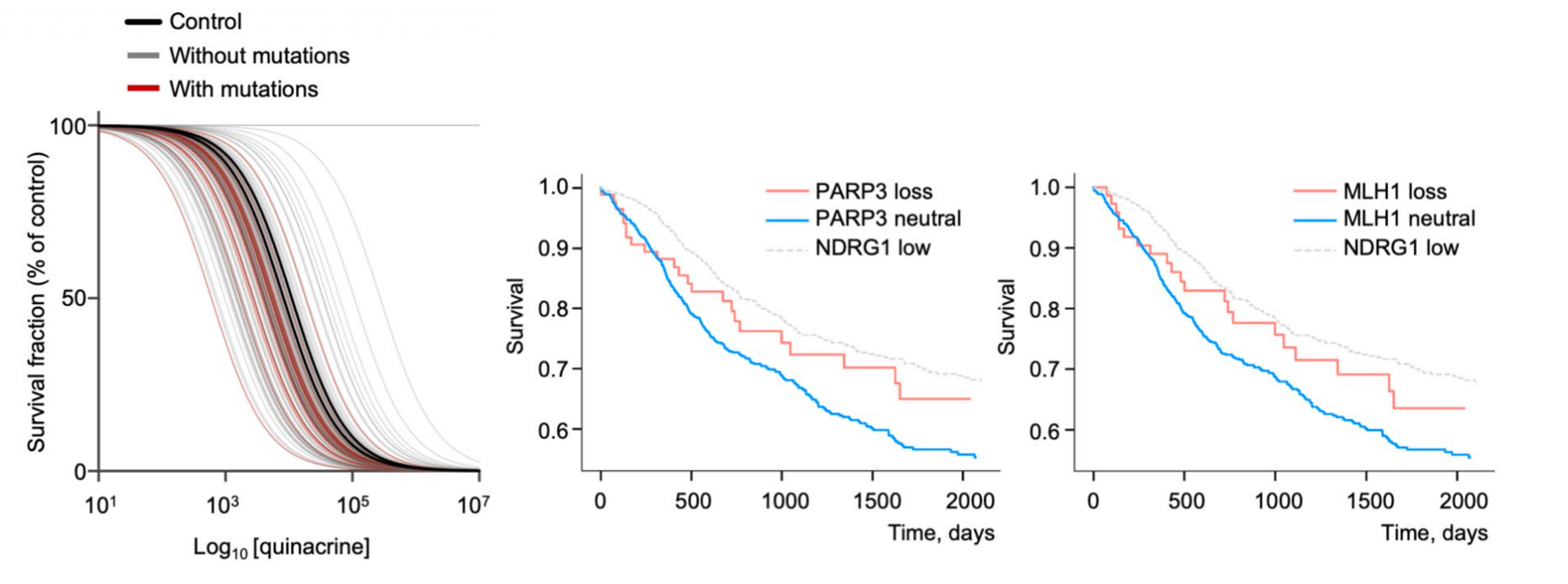
Figure 4. High-throughput screening across a diverse panel of cancer cell lines identified patterns of quinacrine sensitivity, while patient-data analyses showed that loss of MLH1 or PARP3 was associated with improved survival among patients whose tumors had high NDRG1 expression.
While quinacrine served as the experimental tool compound throughout the study, the authors conclude that the broader opportunity lies in developing selective therapeutic approaches targeting the NDRG1 pathway in genetically defined cancers characterized by DNA repair deficiencies. The findings establish NDRG1 as a biologically relevant regulator of DNA damage repair and provide a foundation for future development of more selective therapeutic strategies targeting this pathway.
Publication
Mkrtchyan GV, Veviorskiy A, Meisen ZG, Petr MA, Mercurio TC, Bakula D, et al. NDRG1 expression in cancers confers dependence on DNA damage repair and sensitivity to quinacrine. Science Signaling. Published July 21, 2026. DOI: 10.1126/scisignal.adv4272
Mkrtchyan GV, Veviorskiy A, Meisen ZG, Petr MA, Mercurio TC, Bakula D, et al. NDRG1 expression in cancers confers dependence on DNA damage repair and sensitivity to quinacrine. Science Signaling. Published July 21, 2026. DOI: 10.1126/scisignal.adv4272